
Analysis: Munich Security Conference 2026
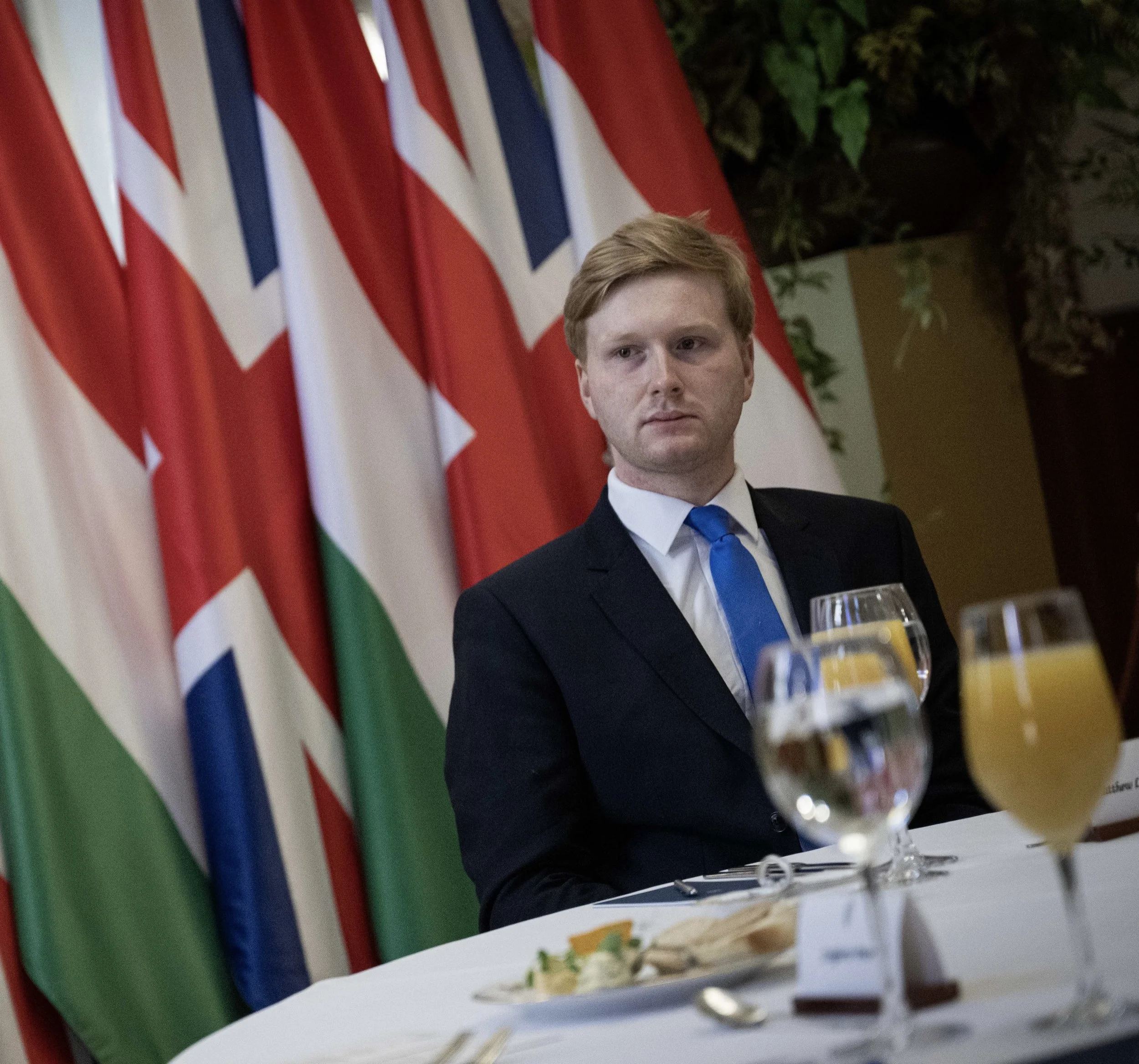
Matthew Davies
Policy Director, UK Abraham Accords Group
The Munich Security Conference convened last week in the Bavarian city to discuss Euro-Atlantic security questions. Conversations ranged from NATO, artificial intelligence, Ukraine, hybrid warfare, nuclear proliferation, the Arctic , biosecurity and many more. The MSC also provided an opportunity for world leaders and foreign ministers to gather.
British Prime Minister Sir Keir Starmer used his speech to call for closer ties to Europe, saying that allies were not dealing with the ‘Britain of Brexit years’. Starmer met with German Chancellor Merz and French President Macron- known as the E3 grouping. Foreign Secretary Yvette Cooper spoke on a panel about women and girls, the topic of which the United Kingdom is the penholder at the UN.
The MSC also hosted discussions regarding the Middle East, and was attended by several dignitaries from the Middle East and North Africa region.
US Republican Senator Lindsey Graham- known for close personal relationships with President Trump, Prime Minister Netanyahu, and Crown Prince Mohammed bin Salman- called for Saudi Arabia to ‘knock it off’, referring to recent tensions between Saudi Arabia and UAE. Meanwhile, Democratic US Congresswoman from New York Alexandra Ocasio-Cortez used the occasion to develop her foreign policy reputation, knowledge, and contacts. Ocasio-Cortez continued her critical stance toward Israel, and called for ‘class based internationalism’ to replace current models of international relations thinking.
Foreign Minister of Saudi Arabia, Prince Faisal bin Farhan Al Saud, spoke on a panel titled ‘Breaking Point: The International Order Between Reform and Destruction’, alongside US Ambassador to the UN Mike Waltz and EU foreign policy chief Kaja Kallas. Prince Faisal also spoke at a panel titled ‘Building on Momentum in the Middle East: From Promise to Progress?’. He was joined by his Syrian counterpart Assad Hasan Al Shaibani.
The MSC Middle East Consultation Group (MECG) published a detailed report, which contained findings from a year-long process. The MECG was launched in December 2024 and is a Track 1.5 dialogue involving former high level policymakers and experts. Recurring themes of these discussions create the focus of the paper. Consultations took place throughout 2025 in Amman, Cairo, and Bavaria. The MEGC also met on the sidelines of several conferences such as the Doha Forum.
The United Arab Emirates was represented by Lana Nusseibeh, Minister of State for Foreign Affairs, and Dr. Sultan Al Jaber, Minister of Industry and Advanced Technology, Abdulla Balalaa, Assistant Minister for Energy and Sustainability Affairs, and Dr. Anwar Gargash, Diplomatic Advisor to the President of the UAE.
Nusseibeh held over 40 bilateral meetings with representatives of over 20 countries, and met with NATO and EU leaders. Nusseibeh also met with Massad Bolous, US Advisor for Arab and African Affairs, to discuss the concerning situation in Sudan. Nusseibeh was focused largely on EU-UAE economic ties, following the signing of a Comprehensive Economic Partnership Agreement with the EU. Dr. Gargash participated in a panel discussion about the reconstruction of Gaza, alongside Palestinian Foreign Minister Varsen Aghabekian Shaheen, US Senator Chris Murphy, and former Israeli Foreign Minister Tzipi Livni.
The situation in Iran was discussed in interviews with opposition leader Reza Pahlavi and panels with Senator Graham and Karim Sadjadpour. Syria was a topic of discussion and Foreign Minister al Shaibani attended, along with Social and Labour Minister Hind Kabawat. Both attended a bilateral meeting with US Secretary of State Marco Rubio. A panel discussion on engagement with the Sahel featured panellists from Sierre Leonne, Mauritania, ECOWAS, the EU, and the United States.